Anyone who’s walked near wetlands or water during red-winged blackbird nesting season understands this sign — “Beware of red-wing [sic] blackbirds. Birds may exhibit aggressive behavior.” They left me alone.


Anyone who’s walked near wetlands or water during red-winged blackbird nesting season understands this sign — “Beware of red-wing [sic] blackbirds. Birds may exhibit aggressive behavior.” They left me alone.

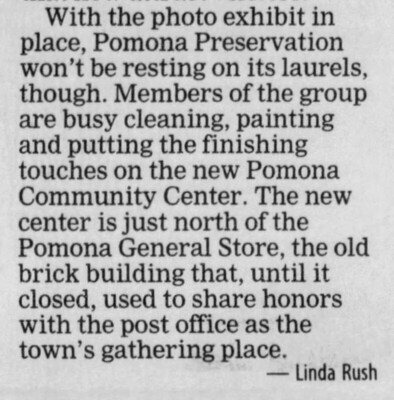
On a 2013 visit to Shawnee National Forest in southern Illinois, I came across this gem at a crossroads near the Pomona Natural Bridge. Finding the photos again, I was curious about what this building had been and when it closed for good.
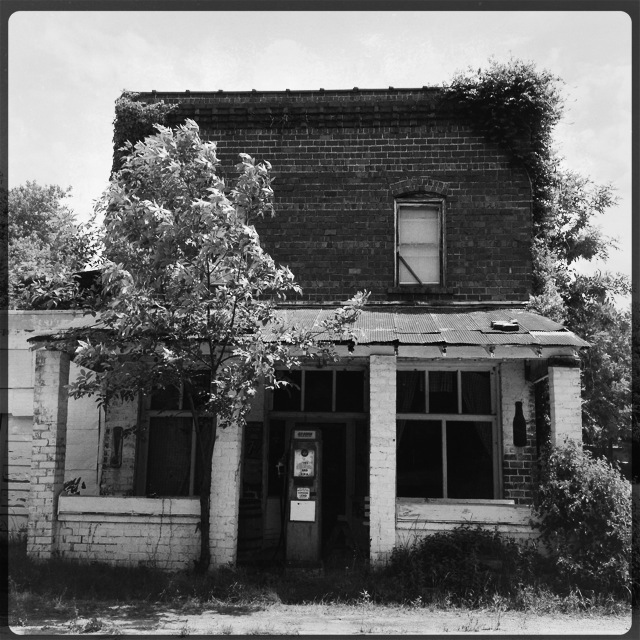
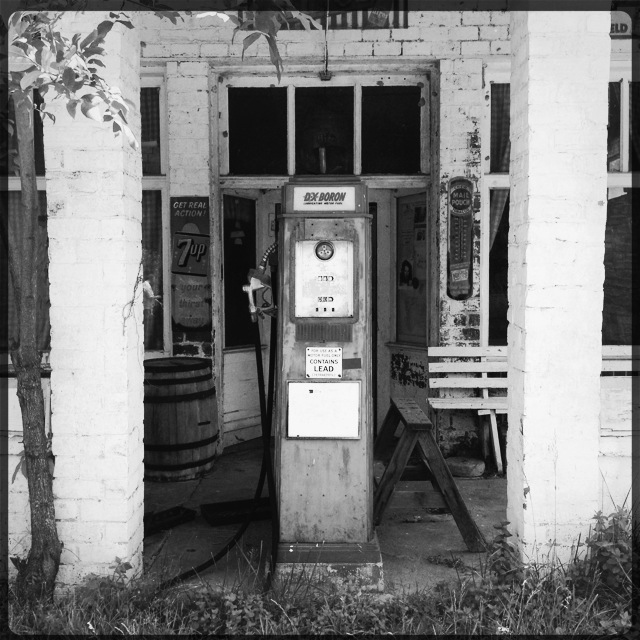
It’s the Pomona General Store, and even the New York Times published an article about it.
At an Illinois Country Store, Nostalgia Sells Best
July 15, 1987
The store was built in 1876 when Pomona, about 15 miles southwest of Carbondale near the southern tip of Illinois, was a railroad town with more than 500 residents and a shipping point for produce.The original wooden store burned down in 1915. A rebuilt store burned in 1917, and a brick store was built the same year to replace it.
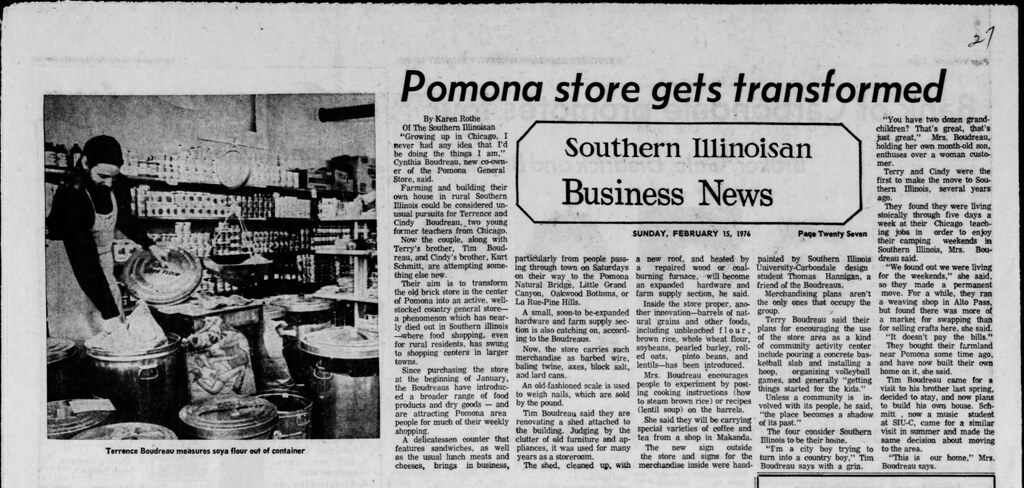
I dug around newspapers.com and found a little of the store’s most recent history starting with the 1970s, when media mentions picked up. Over the next couple of decades, the store changed hands a few times. It also attracted attention as a relic — an old-school general store in an era of big box stores. For years it seemed to be a center of Pomona community. Even after it closed, its location was used for community events like bake sales.

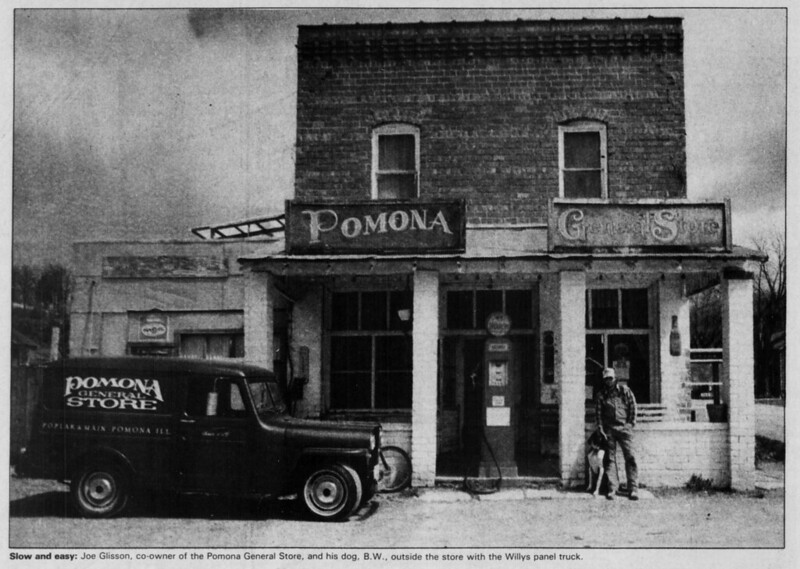
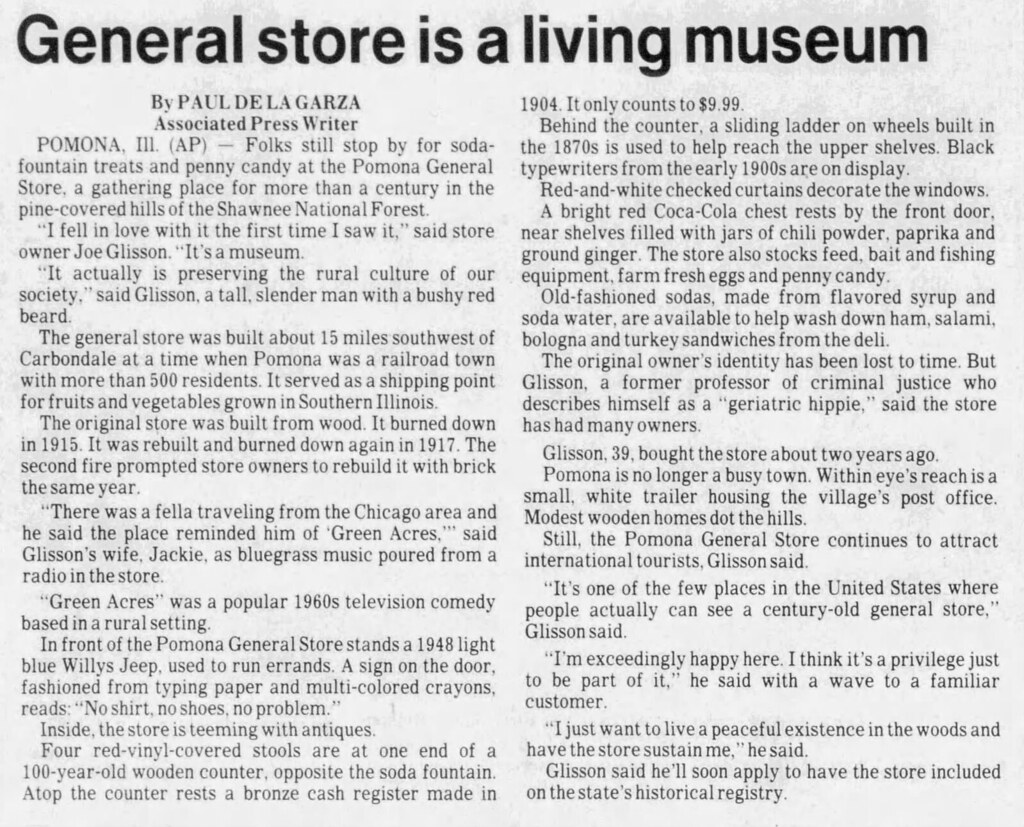
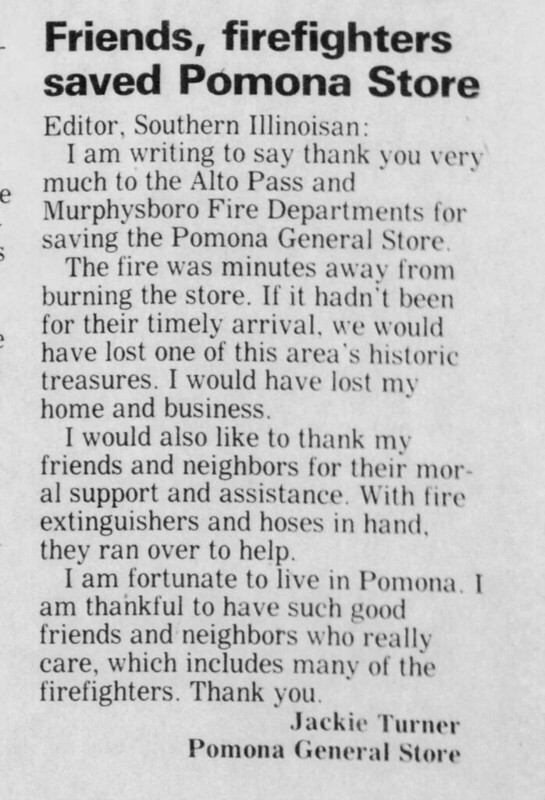
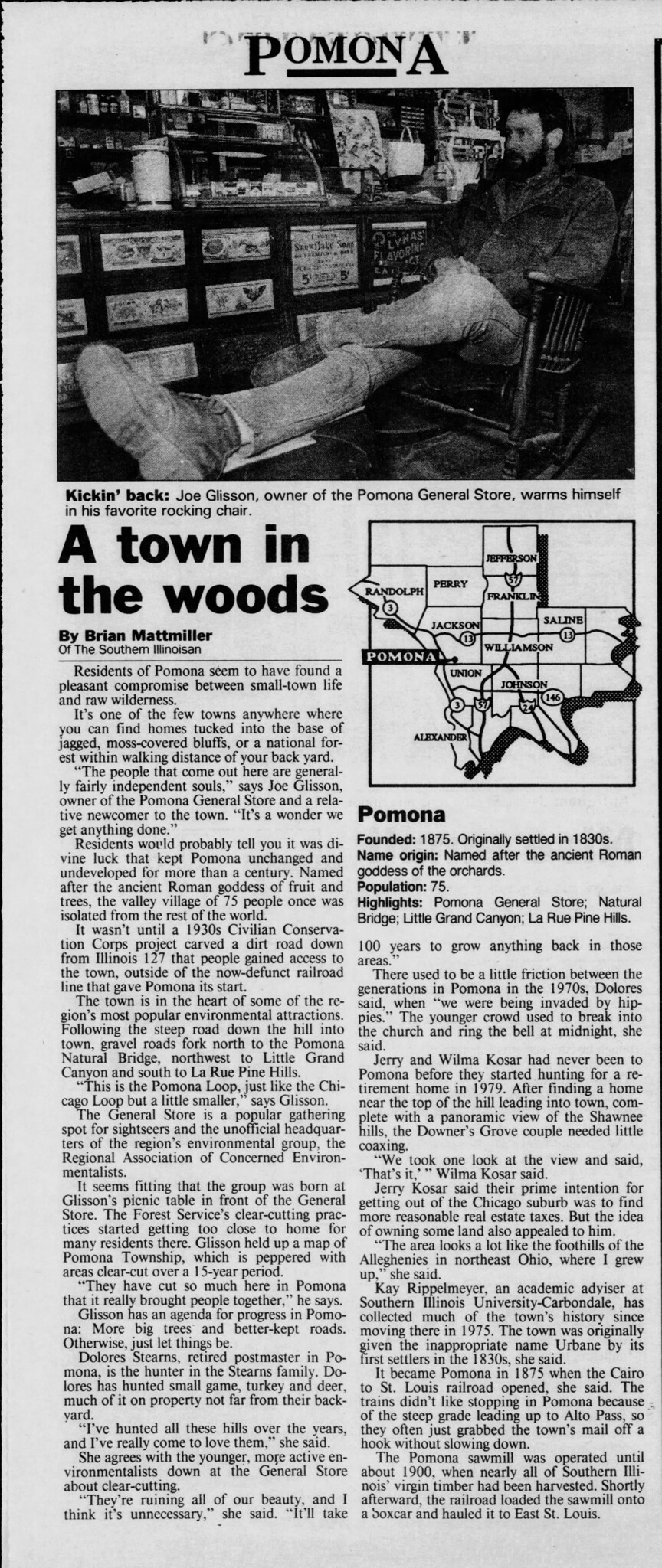
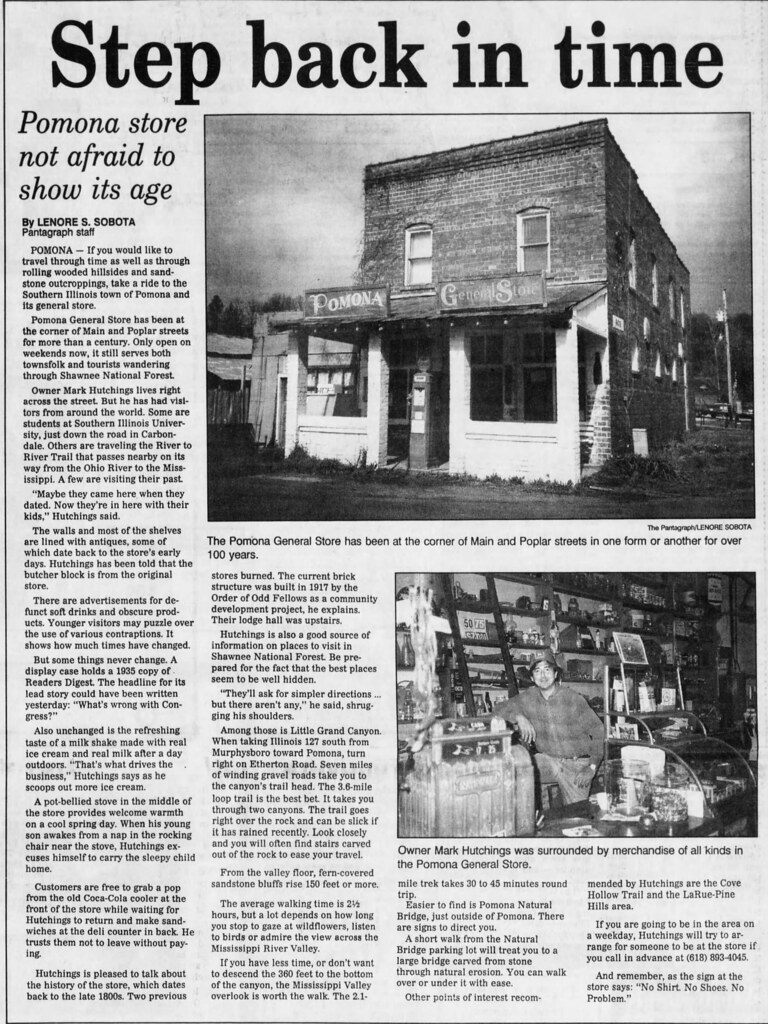
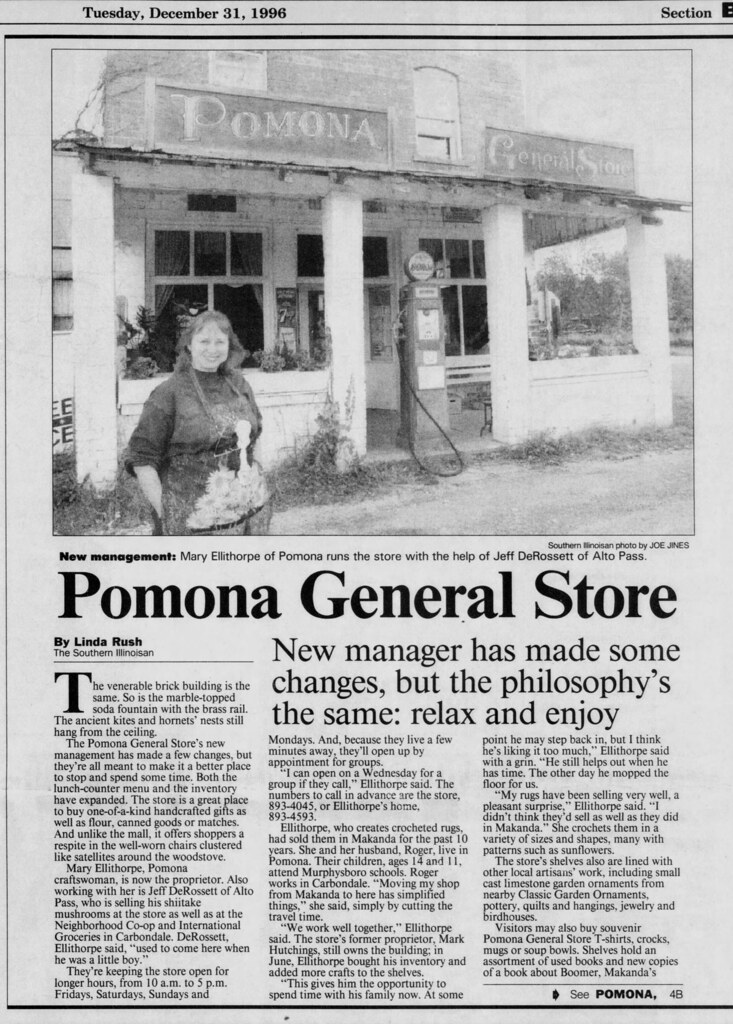
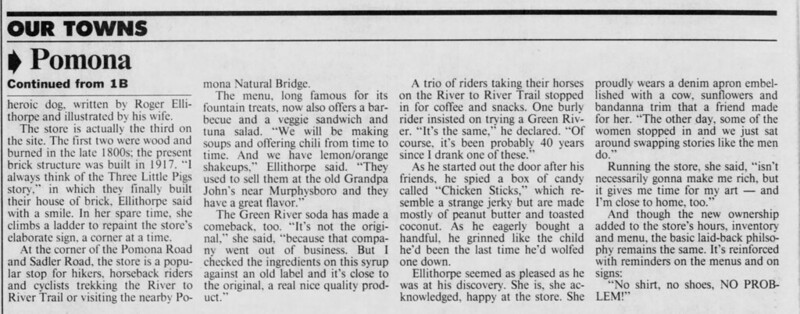
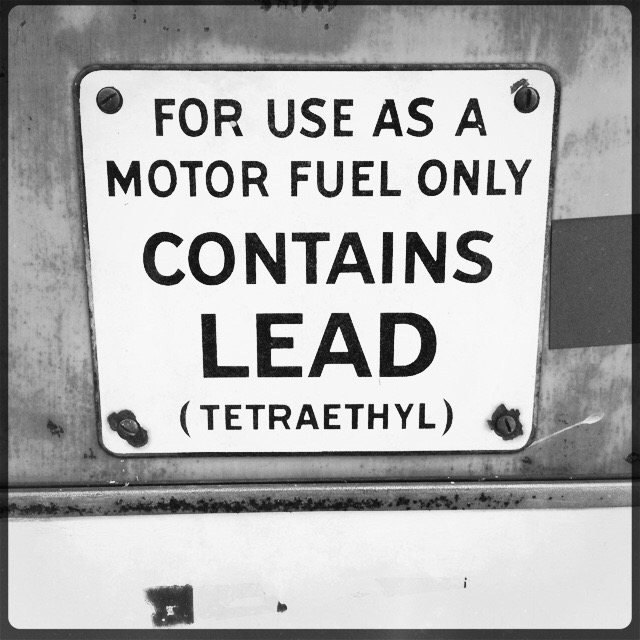
A few people have mentioned surprise the gas pump was in place (as of 2013) as they are “very collectible.” I found a photo from 2022 that shows the pump still there. Perhaps the Pomona community keeps a watchful eye on it.
The store must have closed between 2000 and 2002. Over the next decade or so, it deteriorated more than I would have expected. I’m reminded of what I saw of the TV series “Life After People,” which speculated how plants, wildlife, and other forces would eat away at the infrastructure and buildings humans have wrought after they were no longer maintained.
I imagine someday in Pomona the ivy will finally take over the store, and time will erase the memories.
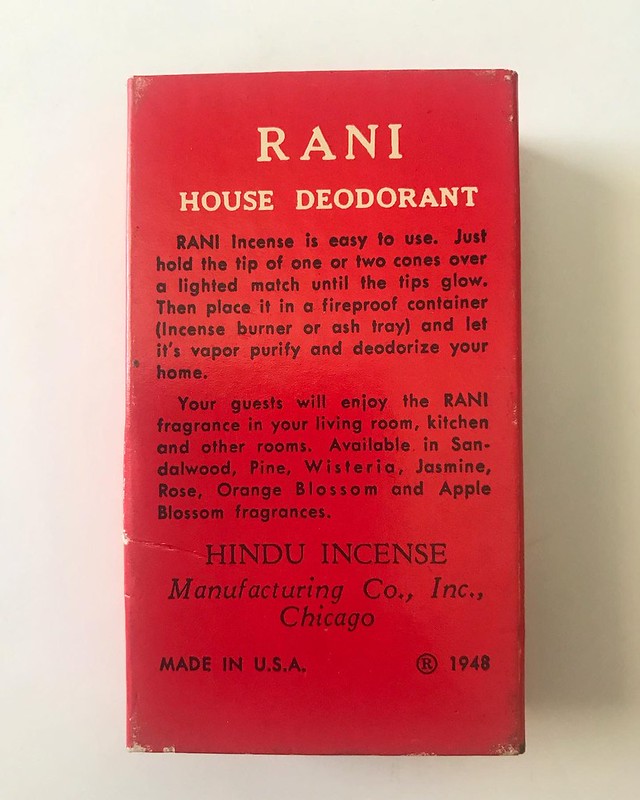
Both my parents were born during the 19-teens and weren’t what you’d call “hippies.” We had something associated with hippies, though — incense. RANI incense cones, to be precise, usually pine. Gift? Sale? I don’t know, but my mother liked them even if we used them sparingly. I’ve continued the tradition, buying incense (if not RANI) sporadically over the years.
Something made me think of RANI, so I looked up images of the box and found RANI, marketed as “house deodorant,” came from Chicago 60616. According to the trademark database the Hindu Incense Manufacturing Co. , Inc., was located at 2620 South Dearborn St. Office? Factory? I may never know. Sadly, today it’s a vacant lot. You can sometimes find the remaining boxes for sale on sites like eBay and Etsy.


More about the RANI mark:
Word Mark RANI
Goods and Services (EXPIRED) IC 003. US 006. G & S: INCENSE. FIRST USE: 19270415. FIRST USE IN COMMERCE: 19270810
Mark Drawing Code (5) WORDS, LETTERS, AND/OR NUMBERS IN STYLIZED FORM
Serial Number 71527404
Filing Date July 5, 1947
Current Basis 1A
Original Filing Basis 1A
Registration Number 0500209
Registration Date May 11, 1948
Owner (REGISTRANT) HINDU INCENSE MANUFACTURING CO. CORPORATION ILLINOIS 2620 SOUTH DEARBORN ST. CHICAGO ILLINOIS
(LAST LISTED OWNER) GENIECO, INC. CORPORATION BY CHANGE OF NAME FROM ILLINOIS 200 NORTH LAFLIN ST. CHICAGO ILLINOIS 60607Assignment Recorded ASSIGNMENT RECORDED
Type of Mark TRADEMARK
Register PRINCIPAL
Affidavit Text SECT 15.
Renewal 2ND RENEWAL 19880511
Live/Dead Indicator DEAD
Genieco lead me to the current Gonesh brand website, from which I learned:
In 1923, a Lithuanian immigrant named Radzukinas acquired a small company, The Hindu Incense Company. For business purposes, he changed his name to Radkins and changed the fortune of his small company by dedicating himself to the manufacture of quality charcoal incense cones and incense burners. Laurent Radkins operated the Hindu Incense Company successfully from the 1920s to the 1960s.
In the mid-sixties, the second generation of the Radkins family entered the business and Genieco, Inc. was born. Soon, the product offering was expanded to include incense sticks. The new brand name was GONESH®, named after the Hindu Elephant Boy, the God of Luck. The name Gonesh was trademarked in 1965.
The Chicago-based Hindu Incense Manufacturing Co., Inc., owned and run by a Lithuanian immigrant, marketing made-in-U.S.A. “house deodorant” incense cones to Greatest Generation housewives — a very American American dream.
On August 12, 2021, the United States Postal Service issued “Backyard Games,” sure to appeal to the nostalgic baby boomer like me.

Per USPS:
The stamp pane features eight unique designs illustrating eight backyard games:
- badminton
- bocce
- cornhole
- croquet
- flying disc
- horseshoes
- tetherball
- variation on pick-up baseball
Each design emphasizes the movement of the game pieces, giving a dynamic quality to the artwork, with a simplified style that evokes the nostalgic feeling of playing backyard games as a child.
Later my brother scanned some old slides, likely taken when he was home from the Army. They included photos of two of my aunts and me playing Pop-A-Lot, a backyard game from Tupperware I’d half forgotten.
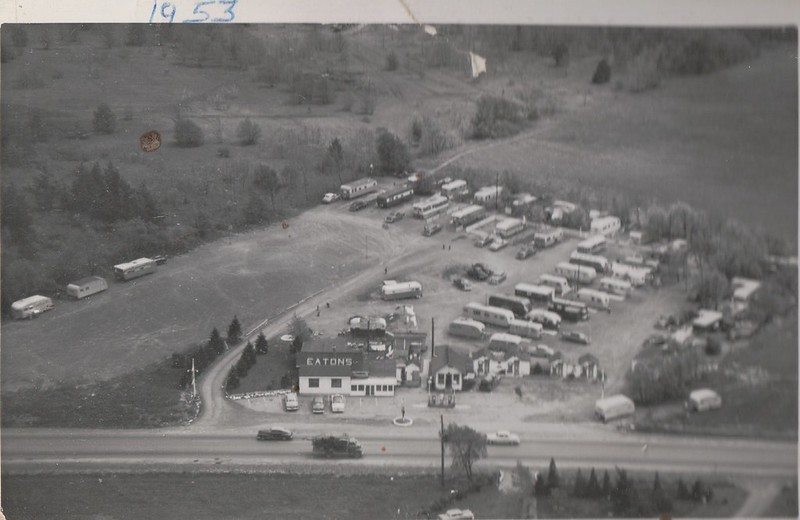
Our trailer was at the end of a row, with a field beyond. My dad and the trailer park owner had an understanding. We could use the field next to the trailer rent free if we were willing to mow and maintain it. Our yard on the other side was small and shrank more when my dad planted a shed in the middle of it, so this was a great perk.
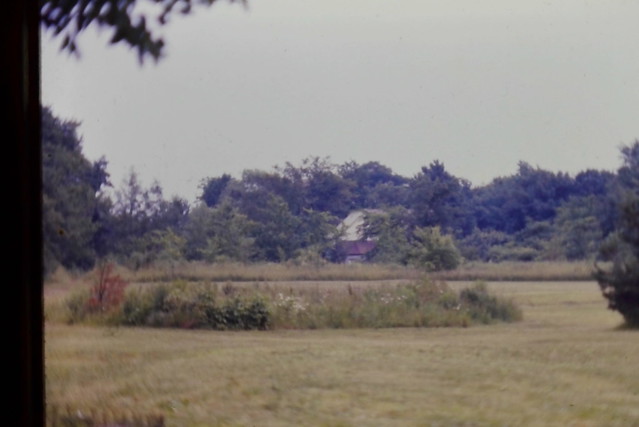
The field offered us two to three times the space, up to the point it turned into an uneven, weedy, wet depression. My dad had borrowed a glider, which he put on that side of the trailer along with a table and umbrella. (Later he moved them behind the shed for shade. Your choices were roast in the sun all afternoon on one side, or get eaten alive in the evening shade by mosquitoes on the other.)
Dad put up a trellis or two for morning glories and, later, a wild rose he dug out of the wet depression. He got enormous tires to use as raised flowerbeds. He planted a rectangular garden with flowers like zinnias and vegetables like bell peppers, anchored by Virgil’s Arbor Day ash tree at the southwest corner.

A light pole next to the trailer sported a board with horseshoes tacked to it. I have no idea where they came from. We may have used them once or twice. I loved the idea of having horseshoes, once associated with luck, and wondered if ours had been worn by a horse.
Of course we tossed a flying disc around (maybe a Frisbee). We played badminton; I remember I hit the birdie too hard like it was a tennis ball. Virgil and his friends played a few games of pick-up baseball and even flag football. They were surprised that I could sometimes hit the ball almost as far as the woods. Not bad for a girl eight years younger than her brother and his friends. The trailer park also had a basketball hoop stuck to a light pole in the field. The last time the basket went missing it wasn’t replaced. By then, most of the people who would have used it were gone.
The backyard games we played that aren’t on the list: Jarts and Pop-A-Lot.
The last (and possibly first) time we broke out Jarts, my brother (if I recall correctly) speared the top of his friend’s foot. It was quite gory.
Pop-A-Lot’s packaging said:
Could “safe” has been in response to Jarts, which were as unsafe as anything could get?
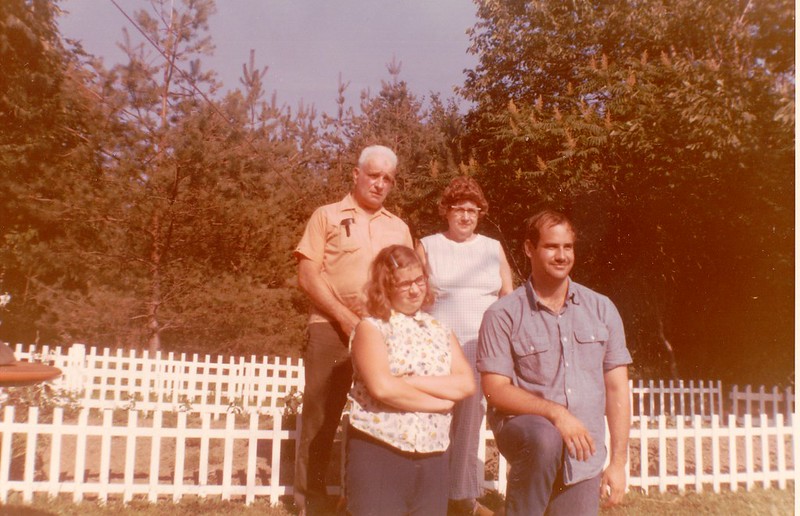
I recall it was fun. It looks like my dad’s sisters liked it too (as long as it didn’t muss their hairdos).
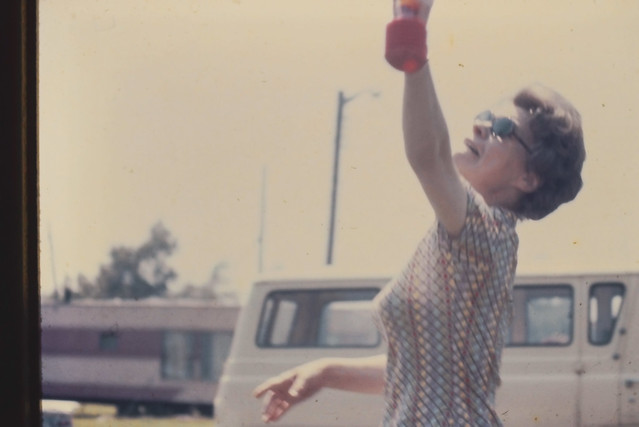

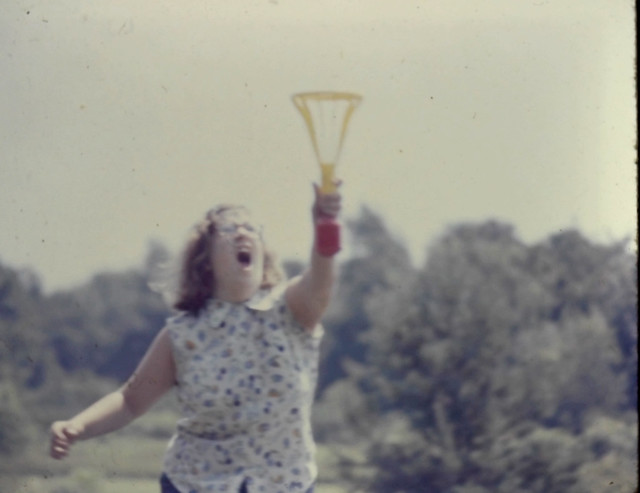
Although it wasn’t a game, the other backyard activity we indulged in involved water. For a while I had a wading pool — two, actually, one boat shaped and the next round. I outgrew both quickly. We also had a sprinkler attachment for the hose that spun around — it was great fun. The only reason I can think of for not using it more was not wanting to waste too much water.
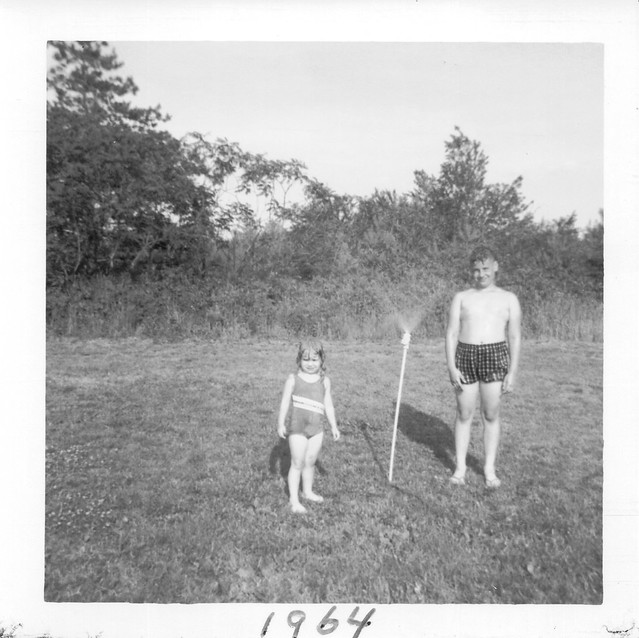

Sadly, by the time I was old enough to play some of these games, my brother had left for the Army, and his friends had dispersed to begin their own futures. The demographic of the trailer park changed, too, with the families moving out and retirees trying to stretch their pensions moving in.
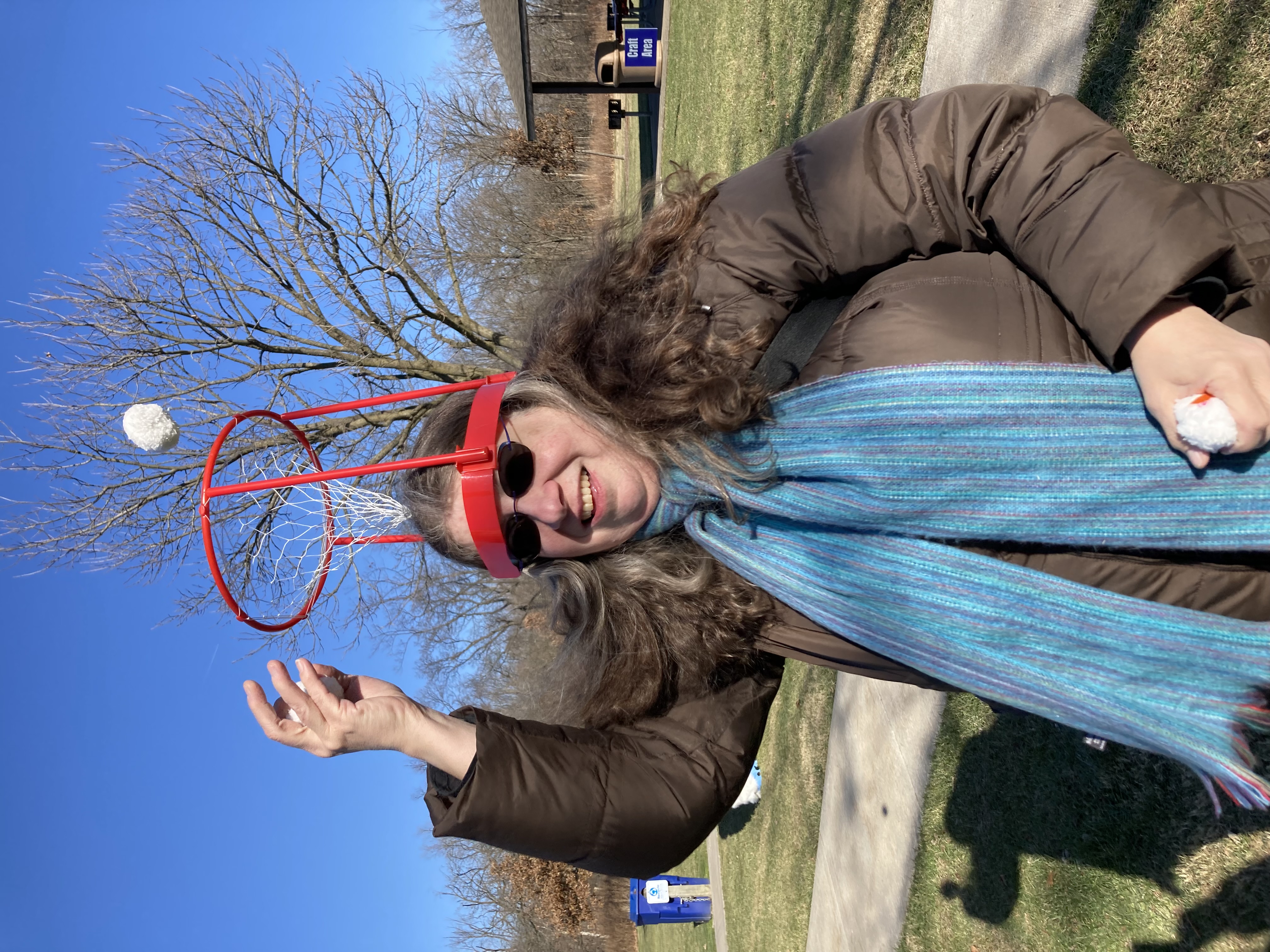
The Forest Preserve District of Will County’s “Winter Wonderland” at Messenger Woods reminded me of Pop-A-Lot and backyard games, even if they weren’t all “real” games. I could see myself working to consistently get a plushie snowman’s head into a basket on my head. After all, it’s fun, safe, and develops coordination.
Quotation from one of the strangest books I’ve read, German Winter Nights (1681) by Johann Beer. When the characters aren’t pulling off frat-level and sometimes sadistic, cruel pranks, they’re moralizing. Ludwig is one of the cruelest of the “brothers.” Here he moralizes.
What does it help us humans that we invade countries in war, lay waste to them, even bring them under our dominion? Many a person fights and defeats his outer enemy and nonetheless permits himself to be so cravenly conquered by his inner and invisible foe, who often can be driven back and away by a single pious thought. What did the miserable Veronia gain through her wantonness? Her desire was brief, her pleasure imperfect, her delight sinful, her marriage stained, her life shortened, and, what I don’t want to believe, her soul perhaps lost forever! Carnal depravity bears such fruits, and she did enjoy it because she never acknowledged the sin in which she was so frightfully lost.
Ludwig in German Winter Nights by Johann Beer
Squirrel wasn’t going to let the red-tailed hawk perched on the stump keep it from a snack.

One of my favorite stays may have been the shortest. It wasn’t a choice, but came about serendipitously.
The drive from Superior, Wisconsin (Amnicon State Park), to Kabetogama, Minnesota, started late, after the summer sunset. J and I spent eternity passing through what, at night, looked like sparsely populated areas. It was a relief (literally) to find a roadside bar. When we arrived at the planned destination, it was probably after 1 a.m. — late enough to find the windows dark, the door locked, and the phone unanswered. It turns out family-run lodges aren’t like a Hilton or Marriott, with 24-hour desk attendants. Oops.
I was too tired to sit up or think, but I didn’t fancy trying to sleep in a car not designed for camping. Somehow I came up with the thought of calling around, which was not easy to do because cell coverage was weak and intermittent. It was difficult both to find places through Yelp! or websites, then to make phone calls. I can’t remember now, but I think i made some calls that went unanswered before I got to Arrowhead Lodge (still in the “A” section). A tired-sounding woman answered.
I quickly explained the situation and probably warned her the call might drop. She said she had space for us — hallelujah! When I said we’d be right over (before she changed her mind), she answered, “No hurry. I have to get dressed.” Yikes.
Arrowhead Lodge is 2.5 miles, or 7 minutes, from Sandy Point Lodge via dark rural roads. I didn’t know if I could stay awake that long. We made it after 2 a.m.
I stayed in a no-frills room with several beds to choose from, a fan, and maybe a radio — my memory is dim. The floor had a shared bathroom, in which several people (maybe even over time) had left assorted toiletries. I didn’t mind — all part of the adventure and shared outdoor experience. I didn’t see anyone, though, and several of the rooms were empty (open doors).
In the morning (a mere few hours later), we ate a great breakfast (al fresco, I think). Our perch overlooked Lake Kabetogama, which I’ve since learned is “Kab” to the locals, plus a flock of white pelicans. If we hadn’t been due to join a Kettle Falls cruise, I could have stayed there the rest of the day, but we left reluctantly. At the cruise departure point, J. realized his camera bag was missing. We raced back to Arrowhead to find our host keeping an eye on it while it took up a barstool. With our wee hours arrival and forgetfulness, she must have thought we were quite the characters.
Sadly, I took only a few poor photos at Arrowhead Lodge.
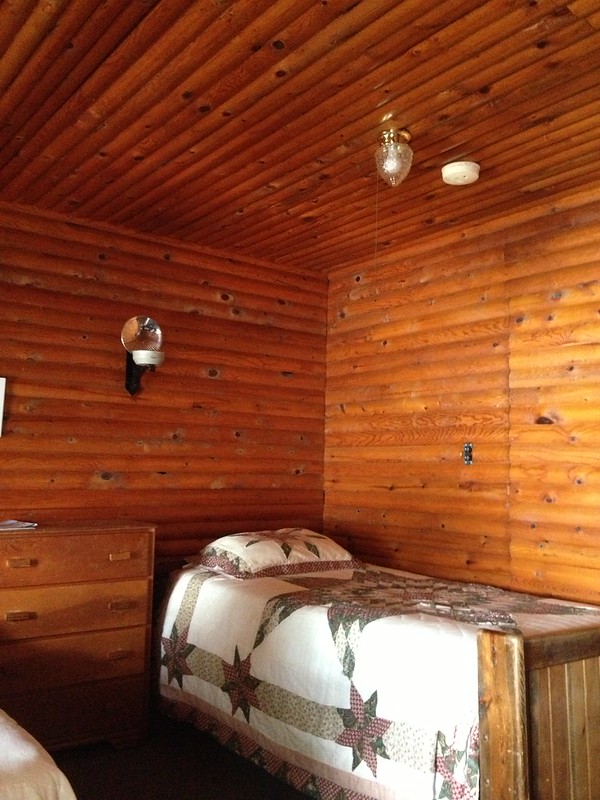

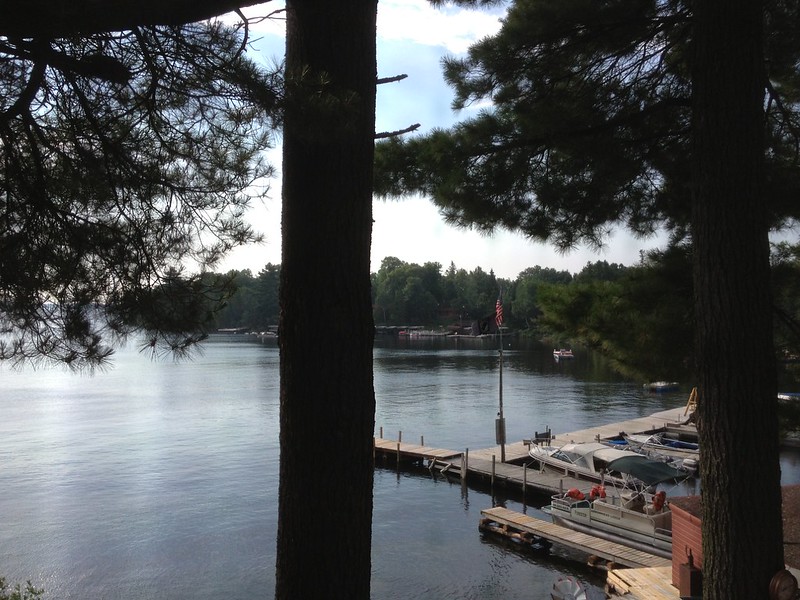
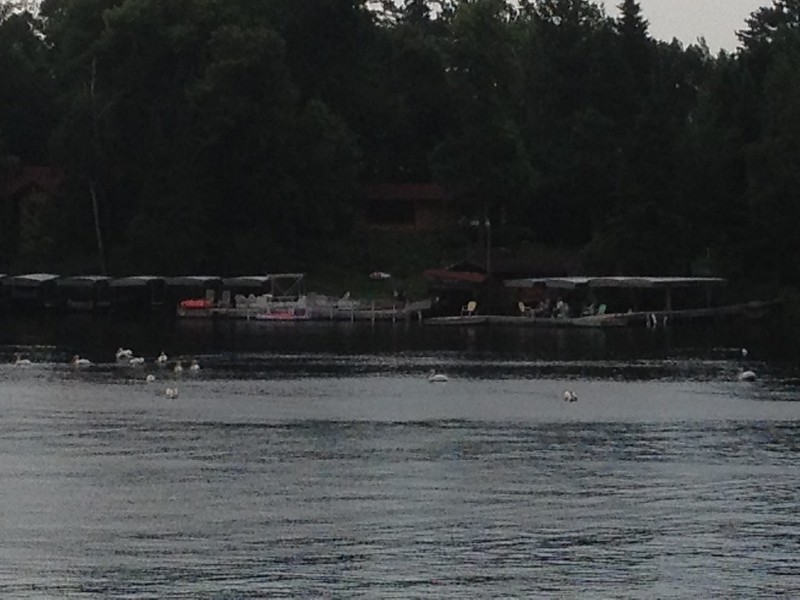
Later the owners, including the poor soul I’d woken up, sold the resort. The new owners have restored Arrowhead. which had deteriorated over the decades since its 1931 opening in the extremes of Minnesota’s climate. The first part of the video below shows the restoration effort and is well worth a look.
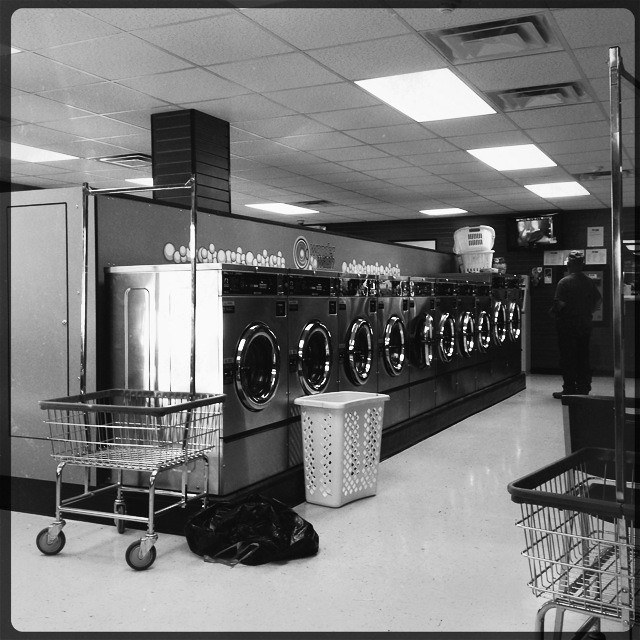
According to the Hyde Park Herald, Hyde Parkers who don’t have laundry facilities in their house or building now have to go outside the neighborhood for clean clothes.
Harper & 53rd Launder Koin, the last laundromat in Hyde Park, is closing for good on Tuesday.
The property, located at 5230 S. Harper Ave., is being purchased by the University of Chicago. According to co-owner Josh Hwang, Launder Koin’s last day in operation is technically Feb. 28, but “residents should try and get their laundry done before Feb. 26.”
The laundromat has been operating off 53rd Street since 2002, predating large nearby developments like Harper Court. Back then, Hwang was only 13 years old and working at the business for his parents.
Though demand for laundromats has dwindled nationwide in the last decade, Hwang said Launder Koin still services between 500 to 1,200 people a month.
I’ve wondered if I should do a “Relics” post on the institution of the laundromat, but it never seemed to be the right time. After seeing this article in the Hyde Park Herald, I figure the right time is now. The laundromat is on its way to becoming a relic, and may be for many years.
I grew up in a trailer — no dishwasher, no washer, no dryer. My understanding is in the trailer park’s early days the women did the laundry in the building “down front” (the entrance from Rte. 20). There may have been an informal “laundry day” (Tuesday? Wednesday?). The building was shut up by the time I was old enough to peer through its grimy windows and appeared to be junk storage.
Later, my dad, the only licensed driver, took the laundry to a laundromat on South Lake Park Avenue (6000? 6150?) in Hamburg on Saturdays, mostly by himself. I think it was on one occasion when I went with him that a woman asked him, with his shock of almost snow-white hair, about his cute granddaughter. “That’s my daughter,” he corrected her. I’m sure the women at the laundromat looked at him with newfound respect after that.
Winter trips took longer because he had to dry everything at the laundromat. I tried to dry jeans once or twice in winter air, but discovered they could break (tear) when frozen.
In finer weather, the wet clothes and sheets came home so we could hang them on the clotheslines. After a few hours in the breeze, they really did smell great. They also could pick up bird droppings, stains from falling wild cherries, or, worst of all, in late spring, tent caterpillars. Around May a plague of them would infest the cherry trees over the trailer and clotheslines. You hoped to pick them off so you wouldn’t find any, or parts of any, on your clothes or bedclothes later.
I imagine the laundromat could be a social place, with regulars on Saturday morning who exchanged greetings and maybe chat — with no phones or devices to distract them. Of course, you could always step out and go to a nearby store. It wasn’t likely at that time your clothes would go missing.
After I came to the university, I didn’t need to use a laundromat. The dormitory had washers and dryers, and my apartments since have had on-site laundry machines. The first was tough — I lived on the fourth floor, and the machines were on the first. There weren’t enough, so I could go down and up the stairs several times before one was free. It used a quaint honor system. You were supposed to plug the machine you used into an electrical outlet associated with your meter. It was fascinating to me to watch the meter move with the increased load. It wasn’t so fascinating when you found someone else’s laundry running up your meter.
At the next apartment, a studio, the small laundry room was slightly below ground level in the next building, and served at least a couple of buildings. In rain, snow, or cold, I’d have to dress for the weather, carry the laundry through the courtyard and a bit down the street, pass through a gate, go down steps mostly too dark to see in the alley, and hope for the best. Then repeat back and forth until all the laundry was washed and dried. I don’t miss that, especially when the weather was grim. It’s hard to get motivated to go out a half dozen or more times in wind, sleet, rain, snow, etc., especially on a day off. If I could drive and a laundromat had been an option, I’d have used it.
I’ve used laundromats twice in the last ten years that I can remember. The first was in Anna, Illinois, during a visit to Cache River and Shawnee National Forest. The other was in the college town of Geneseo, New York, while in the area to see Letchworth State Park.
The one in Anna was almost empty at maybe 8 p.m.; I recall the one in Geneseo was more crowded mid-day. Both seemed well kept, and the one in Anna gleamed with stainless steel machines.
Sadly, I have never been to the laundromat on 53rd — I’m not sure I knew it was still open. The next closest one is in Kenwood, prominently situated in a a plaza off the 47th Street exit of Jean-Baptiste Pointe DuSable Lake Shore Drive. I haven’t been in there, either, although I would need to wash heavier items there. It gets mixed reviews.
In my dad’s day, the big deal would be to have enough change — lots of change. No credit or debit cards, no Apple Pay, not even paper bills. If the price went up a quarter, naturally my dad grumbled. Inflation! To him and some of his peers, it didn’t seem an insignificant amount of money. “It adds up,” he might say.
Laundromats may not entirely disappear, just get farther and farther apart — like Hyde Park residents having to go six blocks further north into Kenwood. Five hundred to twelve hundred people a month aren’t insignificant numbers for a neighborhood. Some laundromats, like the one in Hyde Park, are family businesses. How long will future generations want to carry on the laundromat business in a rapidly evolving society that values money and technology?
Mr. McGuire: I want to say one word to you. Just one word.
Benjamin: Yes, sir.
Mr. McGuire: Are you listening?
Benjamin: Yes, I am.
Mr. McGuire: Plastics.
Benjamin: Exactly how do you mean?
Mr. McGuire: There’s a great future in plastics. Think about it. Will you think about it?
The Graduate
Substitute “laundromats” and you’ll see what I mean.
I eagerly await the Star Trek “garment reprocessor”/”cleaning processor.”
Worf: Before being allowed to play, he was to put his soiled clothing in the garment reprocessor.
Keiko: One night goes by . . . two . . . a week . . . ten days . . . by now there’s a pile of socks half a meter high!
O’Brien: Come on . . . it wasn’t half a meter.
Keiko: After two weeks I couldn’t stand it any more. I bundled them up and put them in the cleaning processor. And I’m still doing it.
Mrs. Hale, the woman displaced by her husband’s conscientious concerns from the bucolic south of England to the industrial northern city of Milton (Manchester), has opinions about Milton and its residents. From the 2004 BBC series based on Elizabeth Gaskell’s North and South:
The people here don’t want learning. They don’t want books and culture. It’s all money and smoke. That’s what they eat and breathe.
Not just in 19th-century Milton.